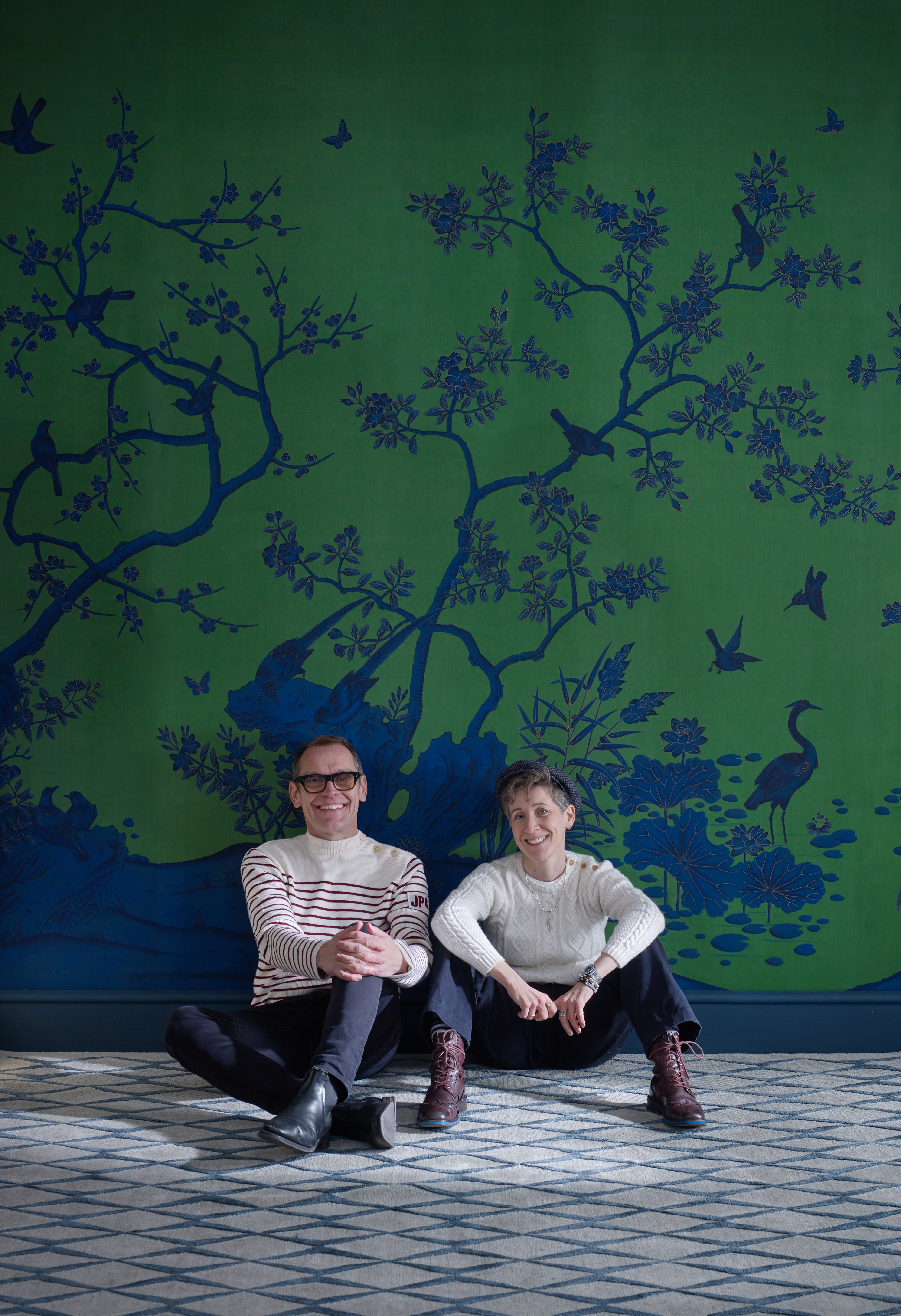
Anglore House: Two decades on, which milestones or projects do you consider most emblematic of Fromental’s enduring identity?
Tim Butcher: Looking back, it’s amazing to see how certain projects continue to define who we are as a brand, even after all these years. One that stands out is our work with David Collins Studio for The London Hotel in New York. We designed a series of wallcoverings featuring stylised maps and embroidered figures. It became more than just decoration — it became iconic and a talking point for the hotel and a defining element of the hotel's identity. That kind of storytelling through design has always been at the heart of what we do.
Another deeply meaningful project was for The Goring Hotel in Belgravia, which we worked on at the time of our 10-year anniversary. That project was really one that encapsulated classical heritage, British eccentricity, elegance—but always with a sense of playfulness. It was a huge honour to be trusted with such a storied property, especially since it was the first time the hotel had closed for refurbishment in over 100 years. We saw it as an opportunity to create something that could last another century, at least. This project was a defining moment for Fromental – one that was oozing with classical style, subversive and fun, where tradition and imagination coexist, where each detail invites reflection and admiration. The Goring Hotel has become a longstanding partner and a collaborator.
AH: Fromental designs often reflect a worldly sensibility and sense of timelessness within the British home. Are there any particular destinations or historical periods the creative team returns to for inspiration?
TB: Absolutely, we draw from a real kaleidoscope of influences. Personally, I’ve always had a deep love of Chinese classical designs and techniques from my travels to China when I was younger. Chinese wallpapers and textiles from the 18th century have deep resonance and connection. When you look at the era’s homes, they were exuberant and alive with exotic narrative. There’s something sojoyful in the way they celebrated colour and material.
The 19th-century Aesthetic Movement, with its fascination with Japanese motifs, has also been a big influence. When Lizzie and I are visiting museums and galleries, we both find inspiration in the decorative arts—anything from Art Deco to 1950s Brutalism. We’re cultural scavengers - anything that feels rich with history and emotional resonance.
AH: How do you envision the role of Fromental wallcoverings in a room’s design – are they the background or the protagonist?
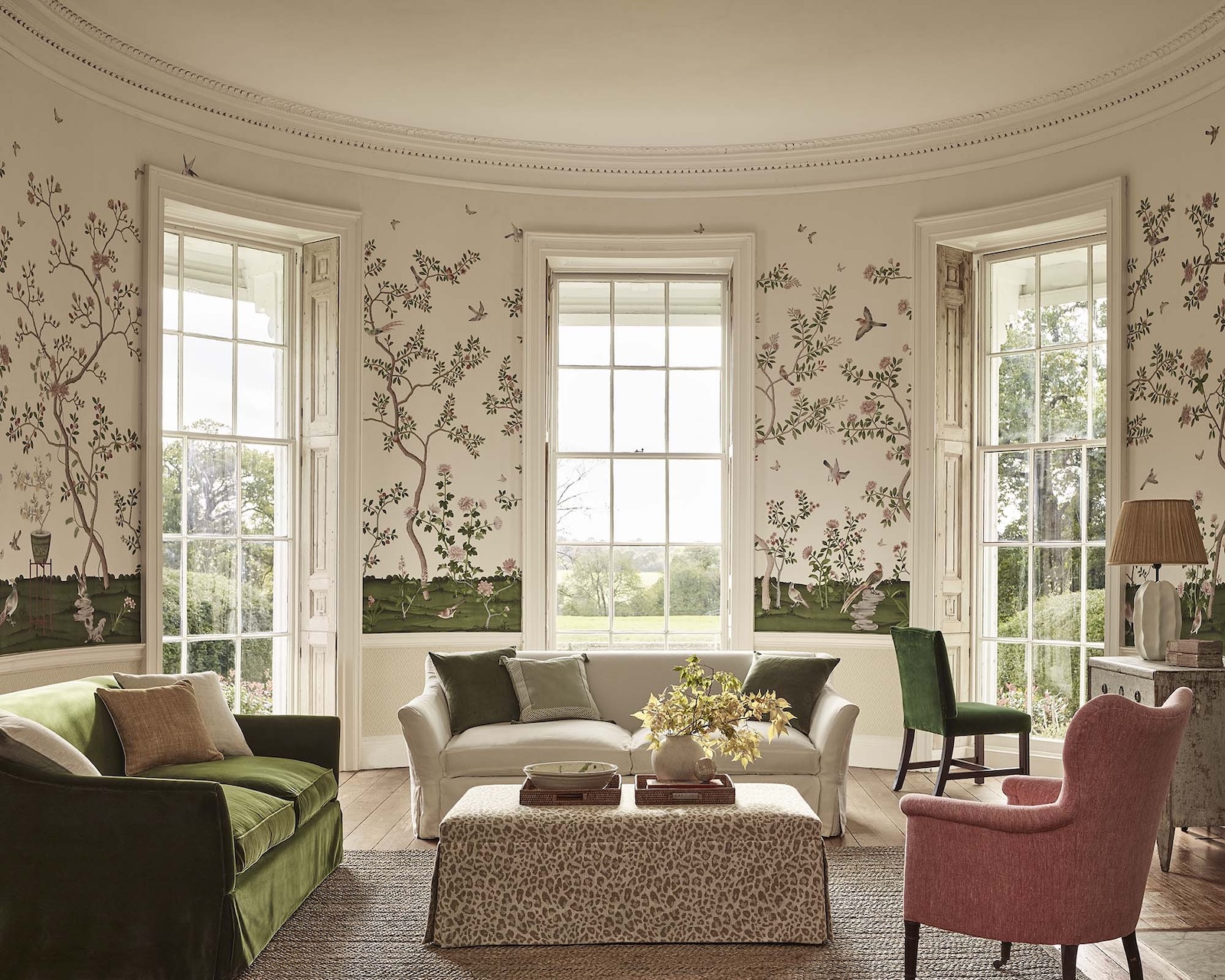
TB: That’s a great question. A wallcovering can be the star of the show—it can set the tone, establish a mood, and become the conversation piece in a room. But it doesn’t always have to shout and dominate. Some of our most successful designs are the ones that quietly support the space, providing a rich, harmonious backdrop.
What’s important is balance. Even the most exuberant pattern should never overwhelm the room. You can hang art, place mirrors, and layer textures on top of it. The wallpaper should work withthose elements, not against them. It’s all about creating an environment where every detail has a role to play, but nothing feels forced or overdone.
AH: As Fromental celebrates its 20th anniversary, how would you define the brand’s evolving legacy?
TB: At our core, we’ve stayed true to the vision we had from the very beginning: to create the most beautiful wallpapers in the world. That simple ambition has carried us through two decades of evolution, experimentation, and growth.
We’ve always believed that great design is timeless. You look at old houses, museums, historic textiles—good design never goes out of style. That’s the tradition we want to be part of, but we’re also pushing it forward with innovation in our designs. We see ourselves as part of the ongoing story of the decorative arts, always adding our voice to that conversation.
A proud moment in our history was being contacted by the Cooper Hewitt Smithsonian Design Museum in New York.They combed through our entire catalogue and selected a piece for their permanent collection. It was incredibly validating—to see our work placed within that broader cultural and historical context.
They placed the piece at the heart of an installation that told a deeper story: of migration, trade, influence.From the Huguenots who brought silk-making to Britain, to the global routes that shaped our aesthetic. A remarkable map that showing how aesthetics evolves with culture. Where we have come from and where we’re going. We see ourselves as part of that same lineage and legacy: one of beauty, craftsmanship, and cultural connection.
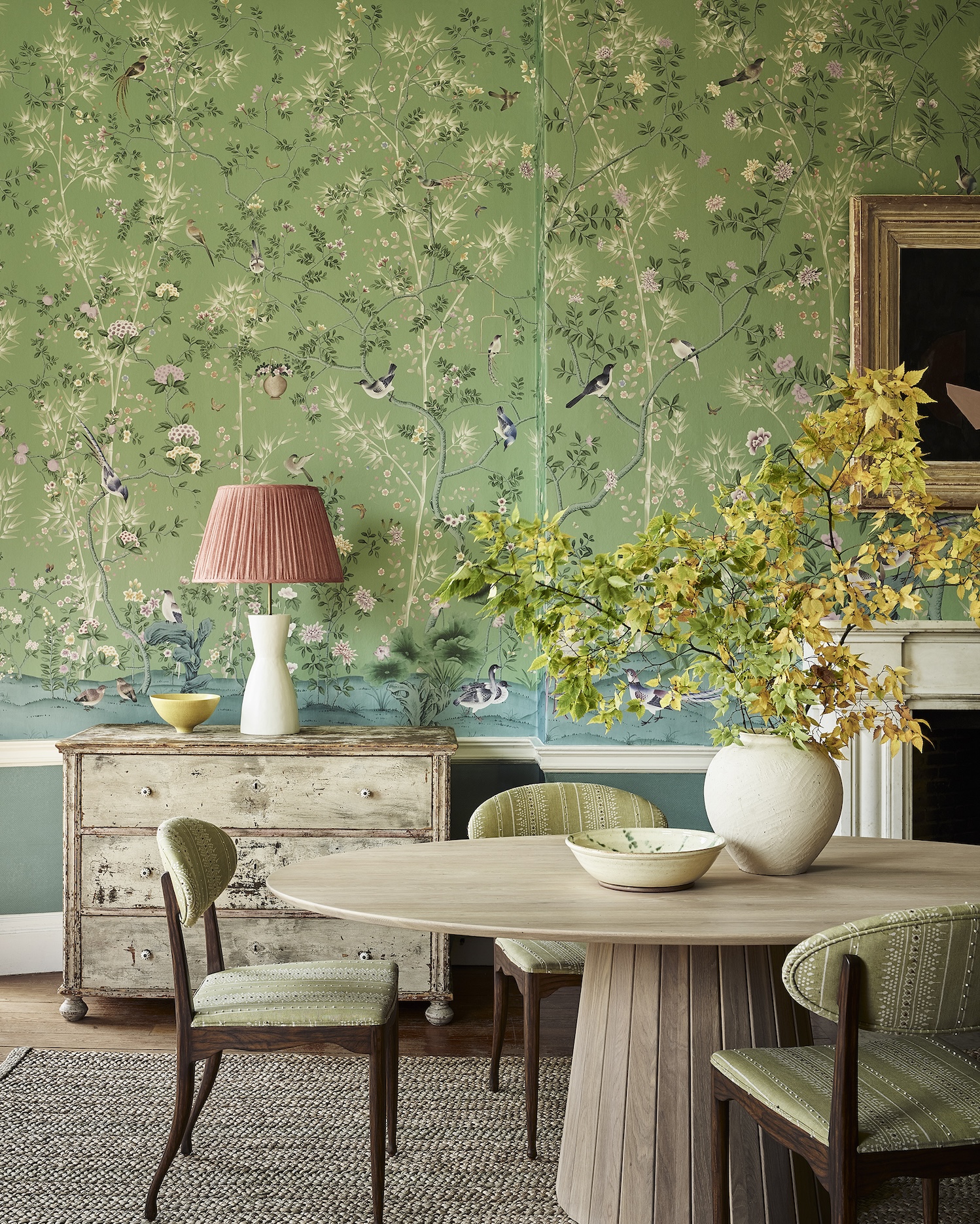
For readers wishing to delve deeper into Fromental's world, their collections can be explored at fromental.com.
All imagery is courtesty of Fromental and its press team.